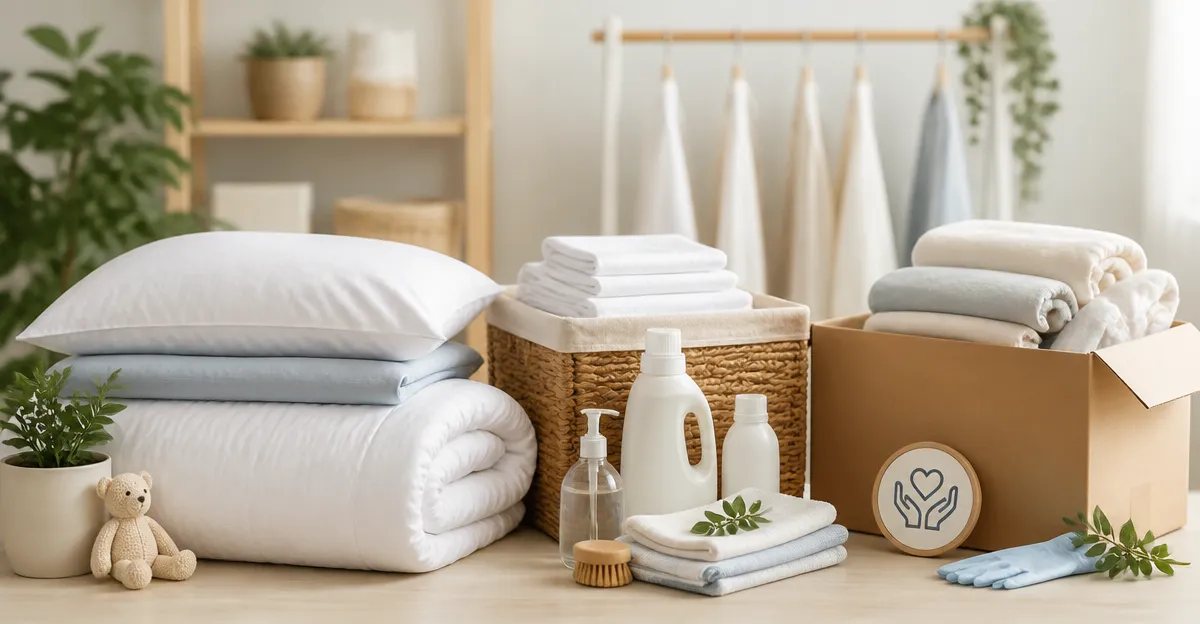
The Ultimate Guide to Safely Selling or Donating Eczema‑Friendly Bedding: Cleaning, Sanitizing, and Labeling for Sensitive Skin
Introduction
The purpose of this guide is to equip caregivers, parents and anyone handling bedding for individuals with eczema with a clear, step‑by‑step process for preparing items for resale or donation. Readers will learn how to evaluate the suitability of bedding, perform thorough cleaning and sanitizing, create accurate labels, and select products that maintain skin‑friendly standards. The guide also highlights four Amazon products that exemplify the qualities required for eczema‑sensitive environments. By following the recommendations, one can minimise the risk of skin irritation while contributing to sustainable bedding reuse.
Throughout the article, the tone remains professional and authoritative, ensuring that both novice and experienced readers receive reliable information. The content balances scientific background with practical actions, offering a holistic view of the entire workflow from assessment to final hand‑off.
Background and Context
Eczema, also known as atopic dermatitis, is characterised by a compromised skin barrier that reacts to irritants such as harsh fabrics, detergents and residual allergens. Research indicates that fabrics composed of tightly woven polyester microfiber, when certified OEKO‑Tex, reduce the likelihood of contact dermatitis because they are free of harmful chemicals. In addition, the breathability and moisture‑wicking properties of microfibers help regulate skin temperature, a critical factor for preventing flare‑ups.
When bedding is transferred from one household to another, it may retain detergent residues, skin oils, or microbial growth that can exacerbate eczema symptoms. Therefore, a rigorous cleaning protocol that includes temperature control, appropriate detergents and sanitizing agents is essential. Moreover, clear labeling of material composition, certifications and care instructions empowers the next user to maintain the skin‑friendly environment.
Cleaning and Sanitizing Eczema‑Friendly Bedding
The first step is to verify that the bedding is still in good condition, with no tears, pilling or discoloration. Inspect seams, elastic edges and stitching for wear; damaged items should be recycled rather than donated. Once the visual inspection is complete, sort the bedding by colour and fabric type to avoid dye transfer.
Use a detergent that is fragrance‑free, dye‑free and labelled as hypoallergenic. Wash at a minimum temperature of 60 °C (140 °F) for polyester microfiber, as this temperature effectively eliminates dust mites and bacterial spores without degrading the fibers. Add a cup of white vinegar to the rinse cycle to neutralise detergent residues that could irritate sensitive skin.
After washing, apply a sanitizing rinse using a solution of one tablespoon of hydrogen peroxide per gallon of water; this method is safe for polyester and does not leave harmful residues. Dry the bedding on a low‑heat setting or line‑dry in direct sunlight, as ultraviolet rays provide an additional natural sanitising effect.
For items that have been previously used in a clinical setting, consider an extra sanitising step with a hospital‑grade disinfectant that is approved for textiles. Always follow the manufacturer’s instructions to avoid compromising the OEKO‑Tex certification.
Donating Eczema‑Friendly Bedding
When donating, select organisations that serve populations with heightened skin sensitivities, such as shelters for children with medical needs. Contact the charity in advance to confirm that they accept micro‑fiber bedding and to learn any specific labeling requirements they may have.
Package each set in a clean, breathable bag rather than a sealed plastic container; this prevents moisture buildup that could lead to mold growth. Include a printed label that lists the material composition, OEKO‑Tex certification number, washing instructions and a brief note on its eczema‑friendly properties.
Document the donation with photographs and a receipt for tax‑deduction purposes. Maintaining records also helps track the impact of your contribution on the community.
Selecting Appropriate Bedding for Resale or Donation
Choosing products that already meet eczema‑friendly criteria simplifies the cleaning process and enhances buyer confidence. The following four Amazon items have been selected because they combine OEKO‑Tex certification, deep‑pocket designs and breathable microfiber construction.
Bedsure Queen Sheet Set offers a 4‑piece ensemble made from 100 % polyester microfiber, rated 4.6 out of 5 stars by over 101,000 reviewers. Its luxurious softness, ruched hem design and deep‑pocket fitted sheet provide a secure fit for thick mattresses, while the OEKO‑Tex certification assures a skin‑friendly finish.
JOLLYVOGUE Queen Comforter Set includes a down‑alternative comforter, sheets and pillow shams, all crafted from 100 % microfiber and polyester fill. The set is OEKO‑Tex certified, features grid quilting to prevent shifting of the fill, and provides a complete “bed‑in‑a‑bag” solution for quick turnover.
Modern Threads Full Sheet Set is designed for full‑size mattresses with deep 14‑inch pockets and a double‑brushed microfiber finish that resists wrinkles, fading and shrinking. Its breathable construction makes it suitable for year‑round use, and the high rating of 4.6 stars reflects consistent customer satisfaction.
CGK Unlimited King Sheet Set provides a king‑size option with a 4‑piece configuration, deep pockets up to 16 inches and a brushed microfiber yarn that feels softer than many cotton alternatives. With a rating of 4.5 stars from over 447,000 reviews, it demonstrates durability and comfort at an affordable price point.
Comparison and Selection Guide
| Feature | Bedsure Queen Sheet Set | JOLLYVOGUE Queen Comforter Set | Modern Threads Full Sheet Set | CGK Unlimited King Sheet Set |
|---|---|---|---|---|
| Material | 100 % Polyester Microfiber | 100 % Microfiber Cover, 100 % Polyester Fill | Double‑brushed Microfiber | Double‑brushed Microfiber |
| Certification | OEKO‑Tex (24.HCN.19195) | OEKO‑Tex Certified | Not Specified (but hypoallergenic) | Not Specified (but skin‑friendly) |
| Deep Pocket Depth | Up to 14 inches | 10‑14 inches | 14 inches | Up to 16 inches |
| Price (USD) | $16.99 | (price not listed) | $23.92 | $25.49 |
| Rating | 4.6/5 (101,734 reviews) | (rating not provided) | 4.6/5 (24,709 reviews) | 4.5/5 (447,068 reviews) |
The table assists readers in matching product attributes to their specific needs, such as deep‑pocket requirements for thick mattresses or the desire for a complete comforter set. For resale, items with higher star ratings and clear certifications typically command better prices.
Best Practices & Tips for Ongoing Maintenance
- Store cleaned bedding in a dry, ventilated container to prevent moisture accumulation.
- Rotate bedding every three months to reduce wear on any single set.
- Use a gentle, fragrance‑free dryer sheet or omit dryer sheets entirely to avoid chemical residues.
- Label each piece with a QR code that links to a PDF of the care instructions and certification details.
- When selling online, provide high‑resolution images that showcase the ruched hem, stitching quality and fabric texture.
Frequently Asked Questions
- Can I use regular laundry detergent on eczema‑friendly bedding? Regular detergents often contain dyes and fragrances that can irritate sensitive skin. It is recommended to use a hypoallergenic, dye‑free detergent.
- Is it safe to bleach polyester microfiber? Bleach can degrade polyester fibers and diminish softness. Use oxygen‑based bleach alternatives if additional whitening is required.
- How often should I replace donated bedding? Replace bedding after three to five washes if any signs of wear, pilling or loss of softness appear. Frequent users with eczema may benefit from more frequent replacement.
- Do deep‑pocket sheets cause overheating? Deep‑pocket sheets made from breathable microfiber do not trap heat; they actually promote airflow, which is advantageous for eczema sufferers.
- What certifications should I look for? OEKO‑Tex Standard 100 is the most widely recognised certification for textiles that are free from harmful substances and suitable for sensitive skin.
- Can I sell used bedding on online marketplaces? Yes, provided the items are fully cleaned, sanitized, and accurately described with condition, material and certification details.
- Is a down‑alternative comforter better than a real‑down one for eczema? Down‑alternative fills are typically hypoallergenic and less likely to harbor dust mites, making them a safer choice for eczema‑prone individuals.
Conclusion
Proper cleaning, sanitizing and labeling of eczema‑friendly bedding protect vulnerable skin while enabling responsible resale or donation. By selecting products that are OEKO‑Tex certified, feature deep pockets and employ breathable microfiber, one can ensure that the next user experiences the same level of comfort and safety. Implementing the best‑practice checklist and adhering to the FAQ guidance will streamline the process and enhance confidence for both sellers and recipients.
Ultimately, the combination of scientific understanding, meticulous preparation and thoughtful product selection creates a sustainable cycle of bedding reuse that benefits individuals with eczema and the environment alike.
Products Featured in This Guide
Bedsure Queen Sheet Set
Price: $16.99 | Rating: 4.6/5 (101,734 reviews)
Featured because it combines OEKO‑Tex certification, deep‑pocket fit and luxurious softness, making it ideal for eczema‑sensitive sleepers.
JOLLYVOGUE Queen Comforter Set
Price: Not listed | Rating: Not provided
Featured for its complete "bed‑in‑a‑bag" offering, OEKO‑Tex certification and grid‑quilted down‑alternative fill that maintains loft after repeated washes.
Modern Threads Full Sheet Set
Price: $23.92 | Rating: 4.6/5 (24,709 reviews)
Featured due to its double‑brushed microfiber construction, deep 14‑inch pockets and wrinkle‑resistant finish, providing a budget‑friendly yet skin‑safe option.
CGK Unlimited King Sheet Set
Price: $25.49 | Rating: 4.5/5 (447,068 reviews)
Featured because it offers king‑size coverage, ultra‑deep pockets up to 16 inches, and a brushed microfiber feel that rivals higher‑priced cotton alternatives.
Frequently Asked Questions
How can I determine if used bedding is safe to sell or donate for someone with eczema?
Inspect the fabric for stains, odors, or damage, and verify it’s made of hypoallergenic, breathable materials like 100% cotton or bamboo.
What is the best cleaning method to remove allergens from eczema‑friendly bedding?
Wash the items in hot water (at least 140°F/60°C) with a fragrance‑free, dye‑free detergent and add a cup of white vinegar to help eliminate residues.
How should I sanitize bedding after washing to protect sensitive skin?
Use a laundry sanitizer or a diluted bleach solution (1/4 cup bleach per gallon of water) during the rinse cycle, then rinse thoroughly to avoid chemical buildup.
What labeling information is essential when reselling or donating eczema‑friendly bedding?
Include fabric type, thread count, washing instructions, any certifications (e.g., Oeko‑Tex), and a note that the item is suitable for eczema‑prone skin.
Are there specific Amazon products recommended for eczema‑sensitive bedding?
Yes, look for items like the Utopia Bedding 100% Cotton Sheet Set, Mellanni Bamboo Sheet Set, Pure Care Hypoallergenic Pillowcases, and the Cozy Earth Bamboo Duvet Cover, all of which are breathable and free of harsh chemicals.