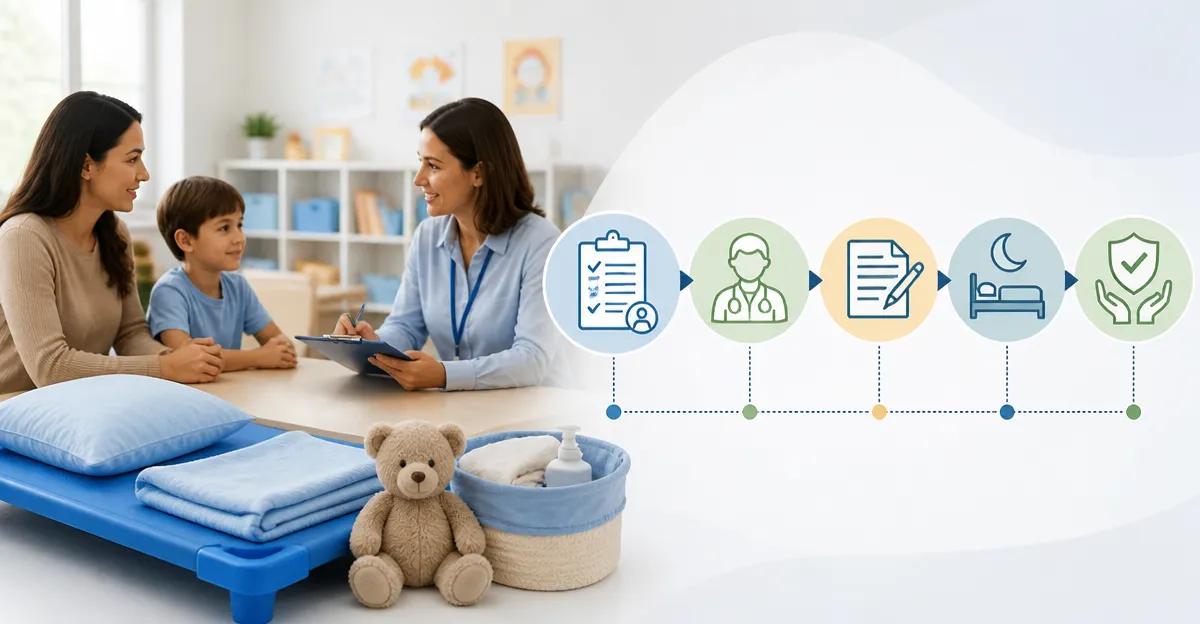
How to Get School Accommodations for Eczema: Bedding & Nap Policy Guide for Parents and Educators
Introduction
Children who suffer from eczema often experience intense itching, skin irritation, and frequent flare‑ups, especially during periods of rest. One of the most common triggers in a school environment is exposure to moisture, friction, and unsuitable bedding materials. This guide explains how parents and educators can collaborate to create a supportive nap and bedding policy that reduces discomfort and promotes academic participation. By following the steps below, readers will learn how to assess needs, communicate with school personnel, implement protective solutions, and monitor outcomes effectively.
What You Will Need
- Medical documentation of the child’s eczema diagnosis and recommended accommodations.
- Written request template for school accommodations (often found on district websites).
- Protective bedding supplies such as waterproof, absorbent underpads.
- Cleaning supplies that are hypoallergenic and fragrance‑free.
- Contact information for the school nurse, principal, and special education coordinator.
1. Gather Medical Documentation and Identify Specific Needs
The first step is to obtain a current medical statement from the child’s dermatologist or pediatrician. The documentation should outline the severity of eczema, triggers to avoid, and any recommended accommodations, such as the use of waterproof bedding or a designated cool area for nap time. Parents should review the statement with the child, if age‑appropriate, to ensure that the child understands the purpose of each accommodation. This preparation creates a clear, evidence‑based foundation for discussions with school staff.
2. Review the School’s Existing Policies and Identify Gaps
Before approaching school officials, it is essential to examine the district’s handbook regarding health plans, 504 accommodations, and nap‑time procedures. Many schools already have policies that allow for individualized health plans, but the language may be vague or outdated. Parents should note any sections that do not address moisture‑absorbing bedding or temperature regulation, as these are critical for eczema management. Identifying gaps enables the parent to propose precise modifications rather than generic requests.
3. Draft a Formal Accommodation Request
A formal request should be concise, professional, and supported by the medical documentation gathered in Step 1. The request must specify the exact accommodations needed, such as: (a) provision of a waterproof, absorbent underpad for the nap mat, (b) permission to use a personal pillowcase made of breathable cotton, and (c) allowance for short, scheduled breaks to apply moisturizers. It is advisable to reference the Individuals with Disabilities Education Act (IDEA) or Section 504 of the Rehabilitation Act to reinforce the legal basis for the request.
4. Schedule a Meeting with the School Team
Contact the school nurse or special education coordinator to arrange a meeting that includes the principal, the child’s teacher, and any relevant support staff. During the meeting, present the medical documentation and the written accommodation request. Emphasize how each accommodation directly mitigates eczema triggers and supports the child’s ability to focus on learning. Encourage collaborative problem‑solving; for example, ask whether the school can store protective bedding in a designated locker to keep it clean and ready for use.
5. Implement Protective Bedding Solutions
One of the most effective tools for managing moisture exposure during nap time is a high‑quality waterproof underpad. The FYGRIP Extra‑Heavy Washable Underpads provide a four‑layer design that quickly absorbs and locks liquid, preventing leaks onto mattresses or chairs. Each pad measures 36 × 54 inches, offering ample coverage for standard school nap mats. The pads are rated 4.6 out of 5 stars by more than 3,000 reviewers, indicating reliable performance in real‑world settings.
Key features that make these underpads suitable for school environments include:
- Extra heavy absorbency capable of holding more than eight cups of liquid, which is essential for children who may sweat or experience nighttime itching.
- Ultra‑soft loop‑velvet top that reduces skin irritation, a common concern for children with eczema.
- Reusable construction that endures over 500 washes, providing a cost‑effective and eco‑friendly alternative to disposable pads.
- Waterproof and quick‑drying layers that protect school furniture while maintaining a comfortable surface for the child.
The price of $29.99 for a two‑pack is reasonable for a school that may need multiple sets for different classrooms. By using these pads, the school reduces the risk of moisture‑related flare‑ups and minimizes cleaning time for custodial staff.
6. Establish a Cleaning and Maintenance Routine
Because the underpads are washable, the school should develop a clear protocol for laundering them after each use. The protocol might include: (a) placing used pads in a sealed, labeled bag, (b) washing on a gentle cycle with fragrance‑free detergent, and (c) air‑drying or using a low‑heat dryer to preserve the waterproof membrane. Staff should be trained to handle the pads using gloves if the child’s skin is broken, to avoid cross‑contamination. Documenting the cleaning schedule helps ensure consistency and demonstrates compliance with health standards.
7. Educate Teachers and Support Staff on Eczema Triggers
Even with protective bedding, educators must be aware of additional triggers such as synthetic fabrics, overheating, and stress. Providing a brief training session that outlines the signs of an eczema flare‑up, appropriate responses, and the importance of allowing the child to apply moisturizers can greatly reduce the frequency of incidents. Handouts that summarize key points—such as “keep the classroom temperature between 68–72°F” and “use cotton‑based clothing”—serve as quick references for busy staff.
8. Monitor the Effectiveness of the Accommodations
After the accommodations are in place, parents should request periodic check‑ins with the school nurse to assess the child’s comfort and skin condition. A simple log that records the number of flare‑ups, nap‑time incidents, and any required medical interventions can provide objective data. If the data indicate persistent issues, the team can revisit the accommodation plan and consider additional measures, such as providing a personal cooling pillow or adjusting the nap schedule.
9. Adjust and Refine the Plan as Needed
Eczema is a dynamic condition; triggers may change with seasons, stress levels, or medication adjustments. Therefore, the accommodation plan should be treated as a living document that can be updated annually or whenever a significant change occurs. Parents should keep an open line of communication with the school, offering to supply updated medical notes and suggesting new products if better options become available.
Tips & Pro Tips
- Carry a small, portable moisturizer kit for the child to use during class breaks.
- Request a designated low‑humidity area for nap time if the classroom tends to become warm.
- Consider using a breathable, cotton‑covered pillowcase in addition to the waterproof pad for added softness.
- Label the child’s personal bedding items with the child’s name to prevent accidental mixing with communal supplies.
- Encourage the school to keep a spare set of underpads in the classroom to avoid delays when a pad needs laundering.
Troubleshooting
Problem: The underpad leaks despite being labeled waterproof.
Solution: Verify that the pad has been washed according to the manufacturer’s instructions; high‑temperature drying can damage the waterproof membrane. Replace the pad if the leak persists and document the incident for the school’s maintenance log.
Problem: The child experiences itching during nap time even with the pad.
Solution: Check the room temperature and ensure the child’s clothing is made of natural fibers. Apply a thin layer of fragrance‑free moisturizer before nap time, and consider adding a cool gel pack wrapped in a cloth to the pad’s edge.
Conclusion
Securing appropriate school accommodations for children with eczema requires systematic documentation, clear communication, and the use of practical tools such as the FYGRIP Extra‑Heavy Washable Underpads. By following the nine steps outlined in this guide, parents and educators can create a comfortable nap environment, reduce flare‑ups, and enable the child to participate fully in classroom activities. Ongoing monitoring and flexibility ensure that the accommodation plan remains effective as the child’s condition evolves.
Products Mentioned in This Guide
Frequently Asked Questions
What documentation is needed to request school accommodations for a child with eczema?
You need a doctor’s diagnosis, a treatment plan, and any recommended accommodations, plus a written request template often provided by the district.
How can parents communicate effectively with school staff about eczema needs?
Submit the medical documentation and request in writing, then schedule a meeting with the school nurse, principal, and teachers to discuss specific bedding and nap policies.
What type of bedding is recommended for students with eczema during nap time?
Use waterproof, absorbent underpads and hypoallergenic, fragrance‑free sheets or blankets to minimize moisture and friction.
Are there specific cleaning guidelines for eczema‑friendly classroom environments?
Clean surfaces and bedding with fragrance‑free, hypoallergenic detergents and ensure regular laundering of any reusable materials.
How should schools monitor the effectiveness of eczema accommodations?
Track the child’s flare‑up frequency, comfort during nap periods, and academic participation, and adjust the plan in collaboration with parents and healthcare providers as needed.