How Water Hardness Affects Eczema: The Complete Laundry Guide to Reduce Flare-Ups
Introduction
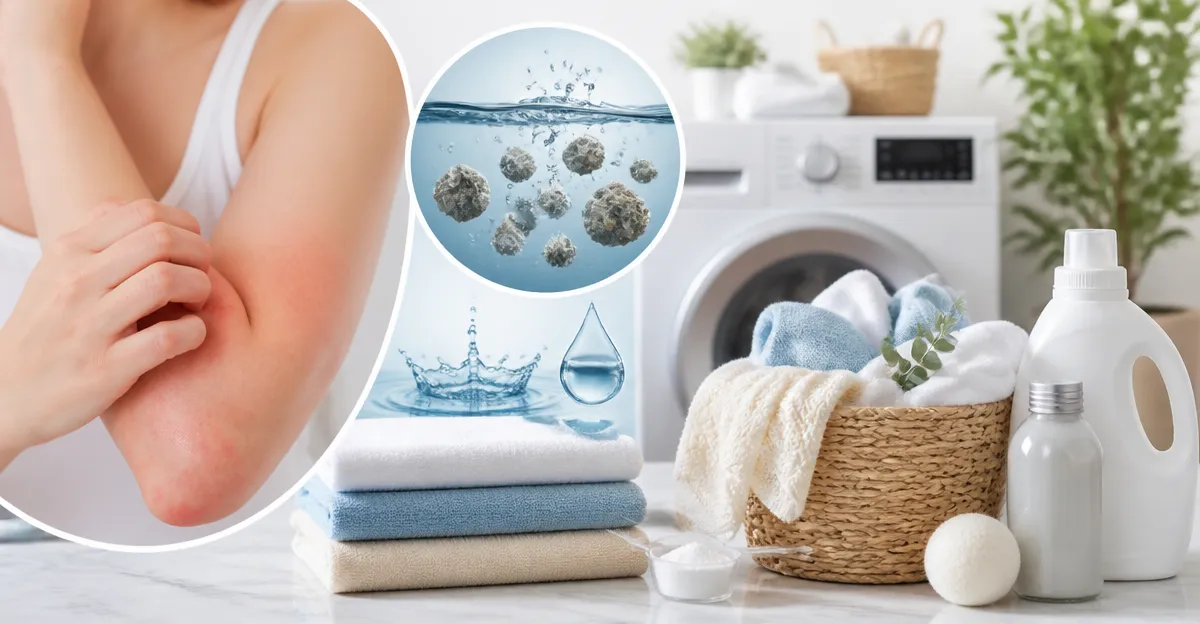
Hard water contains elevated levels of minerals such as calcium and magnesium, which can leave residue on fabric and skin. This guide explains the relationship between water hardness and eczema, and it outlines practical laundry methods that minimise irritation. Readers will learn how to test water hardness, adjust washing routines, and incorporate supportive resources such as the Eczema Relief Diet & Cookbook. By the end of the article, one will possess a comprehensive plan to protect sensitive skin while maintaining clean clothing.
Background and Context
Eczema, also known as atopic dermatitis, is a chronic inflammatory skin condition characterised by itching, redness, and dry patches. While genetics and immune response play primary roles, external factors such as detergents, fragrances, and mineral deposits can exacerbate symptoms. Water hardness is measured in grains per gallon (gpg) or parts per million (ppm); values above 7 gpg are generally considered hard. When hard water mixes with soap, it creates scum that is difficult to rinse, leaving mineral film on garments that may contact the skin during wear.
For individuals with eczema, this mineral film can act as an irritant, disrupting the skin barrier and triggering flare‑ups. Moreover, hard water can reduce the effectiveness of cleansing agents, requiring larger detergent doses that increase exposure to potential allergens. Understanding these mechanisms is essential before implementing laundry adjustments.
Assessing Your Water Hardness
Before altering laundry habits, one should determine the hardness of the household water supply. The following steps provide a reliable assessment:
- Purchase a water hardness test kit from a home‑improvement store or online retailer.
- Collect a sample of tap water in a clean container and follow the kit instructions to add the reagent.
- Observe the colour change and compare it to the provided chart to identify the hardness range.
- Record the result for reference when selecting detergents and water‑softening solutions.
If the test indicates a hardness level above 7 gpg, consider the strategies outlined in the subsequent sections.
Optimising Laundry Detergents for Hard Water
Standard detergents are formulated for soft water and may perform poorly in hard water conditions. Choose a detergent that includes water‑softening agents such as zeolites or sodium carbonate. These additives bind calcium and magnesium ions, preventing them from interacting with surfactants.
Key features to look for:
- High‑efficiency (HE) formulation to reduce suds and improve rinsing.
- Fragrance‑free or hypoallergenic label to minimise allergic reactions.
- Clear instructions for dosage adjustments based on water hardness.
When using a powder detergent, dissolve it fully in warm water before adding garments. For liquid detergents, pre‑dilute with a small amount of water to ensure even distribution.
Incorporating Water Softeners
Water softeners treat the entire water supply, reducing mineral content before it reaches the washing machine. Two primary options exist:
- Salt‑based ion‑exchange systems – These install on the main water line and replace calcium and magnesium ions with sodium ions. They are highly effective for households with consistently hard water.
- Magnetic or electronic conditioners – These devices claim to alter mineral behaviour through electromagnetic fields. While less invasive, scientific evidence of their efficacy is mixed.
For renters or those seeking a low‑maintenance solution, portable washing‑machine add‑ons such as water‑softening crystals can be placed directly in the drum. Follow the manufacturer’s dosage recommendations, typically one cup per load for very hard water.
Rinse Techniques to Remove Residue
Even with the right detergent, a thorough rinse is vital to eliminate mineral film. Implement the following practices:
- Use an extra rinse cycle whenever the hardness level exceeds 10 gpg.
- Set the washing machine to a higher spin speed to extract more water, reducing the amount of residual minerals.
- Consider adding a cup of white vinegar during the final rinse; the acidity helps dissolve mineral deposits without irritating skin.
Vinegar should be used sparingly, as excessive acidity can degrade elastic fibres over time. A balanced approach ensures both skin comfort and garment longevity.
Drying Considerations
Air‑drying clothing outdoors can expose fabrics to additional mineral dust, especially in regions with hard water runoff. When possible, dry garments indoors on a clean rack, or use a dryer with a lint filter that captures mineral particles. If outdoor drying is preferred, shake garments vigorously before hanging to dislodge any remaining residue.
Supporting Skin Health Through Nutrition
While laundry practices address external irritants, internal factors such as diet also influence eczema severity. The Eczema Relief Diet & Cookbook provides short‑term meal plans designed to identify food triggers and soothe flare‑ups. It is a paperback authored by registered dietitian Christa Biegler, RD, and costs $13.66. The book holds a rating of 4.2 out of 5.0 based on 108 reviews, indicating broad reader satisfaction.
Key benefits of the cookbook include:
- Evidence‑based recipes that limit common allergens such as dairy, gluten, and soy.
- Guidance on anti‑inflammatory nutrients like omega‑3 fatty acids and vitamin E.
- Meal‑planning worksheets to track symptom changes alongside dietary intake.
Integrating these nutritional strategies with proper laundry habits creates a holistic approach to eczema management.
Comparison and Selection Guide
The following table assists readers in choosing the most appropriate laundry aids based on household circumstances:
| Solution | Best For | Pros | Cons |
|---|---|---|---|
| HE Detergent with Zeolites | Small families, moderate hardness | Easy to use, no installation required | May need higher dosage in very hard water |
| Portable Softening Crystals | Renters, occasional loads | Low upfront cost, simple placement | Requires correct measurement each load |
| Whole‑House Salt‑Based Softener | Large homes, consistently hard water | Eliminates mineral buildup across all fixtures | Higher installation cost, regular salt replenishment |
| Vinegar Rinse Add‑On | Those seeking natural solutions | Inexpensive, biodegradable | Potential fabric wear if overused |
Readers should evaluate water test results, budget, and living situation before selecting a solution. Combining a high‑efficiency detergent with an occasional vinegar rinse often provides sufficient relief for mild hardness levels.
Best Practices & Tips
To maximise skin comfort while preserving garment integrity, adhere to the following recommendations:
- Always separate eczema‑prone clothing from heavily scented or dyed items.
- Wash new garments twice before first wear to remove manufacturing residues.
- Store laundry detergents in a cool, dry place to prevent clumping, which can affect dissolution.
- Maintain washing‑machine filters and clean the drum regularly to avoid mineral accumulation.
- Document any changes in skin condition after adjusting laundry routines to identify the most effective strategies.
Frequently Asked Questions
- 1. Does soft water completely eliminate eczema flare‑ups?
- Soft water reduces mineral‑induced irritation, but eczema is multifactorial; diet, stress, and genetics also influence symptoms.
- 2. Can I use any fragrance‑free detergent?
- Choose a detergent that explicitly states hypoallergenic and contains water‑softening agents; not all fragrance‑free products meet these criteria.
- 3. How often should I replace the salt in a whole‑house softener?
- Salt levels should be checked monthly; most households need to refill every 2–3 months, depending on water usage.
- 4. Is white vinegar safe for all fabrics?
- Vinegar is safe for most cotton and synthetic fabrics, but it may weaken delicate fibres such as silk or wool if used excessively.
- 5. Will the Eczema Relief Diet & Cookbook help with laundry‑related flare‑ups?
- The cookbook focuses on internal triggers; however, reducing systemic inflammation through diet can complement external measures such as improved laundry practices.
- 6. Do magnetic water conditioners work for eczema?
- Scientific evidence is limited; many users report modest benefits, but they should not replace proven methods like detergents with softening agents.
- 7. Should I wash eczema‑prone clothing at higher temperatures?
- Warm water (30‑40°C) enhances detergent performance without excessively drying the skin; hot water can increase irritation and shrink fabrics.
Conclusion
Water hardness is a significant, yet often overlooked, factor in eczema management. By testing water mineral content, selecting appropriate detergents, employing softening technologies, and executing thorough rinse cycles, one can dramatically reduce skin irritation caused by laundry. Complementary strategies such as the Eczema Relief Diet & Cookbook further support overall skin health. Implementing the practices outlined in this guide empowers individuals to take control of their environment and experience fewer flare‑ups.
Products Featured in This Guide
Eczema Relief Diet & Cookbook
Price: $13.66
Rating: 4.2/5.0 (108 reviews)
Why featured: Provides evidence‑based meal plans that identify dietary triggers, supporting internal skin health while the guide addresses external laundry factors.
Frequently Asked Questions
How does hard water worsen eczema symptoms?
Hard water leaves calcium and magnesium deposits on skin and fabrics, which can irritate the skin barrier and trigger itching and redness.
What water hardness level is considered hard enough to affect eczema?
Water containing more than 7 grains per gallon (≈120 ppm) is generally classified as hard and may aggravate eczema.
How can I test the hardness of my home water supply?
Use a simple test strip or a digital meter; dip the strip in tap water and compare the color chart to determine grains per gallon or ppm.
What laundry adjustments help reduce eczema flare‑ups in hard water areas?
Add a water softener or use a chelating laundry booster, choose fragrance‑free detergents, and rinse clothes twice to remove mineral residue.
Can using a specific detergent or fabric softener prevent eczema irritation?
Yes, hypoallergenic, dye‑free detergents and avoiding fabric softeners with fragrances can minimize skin irritation when combined with softening agents.